Thirteen dozen devils: the collection that grew into a museum
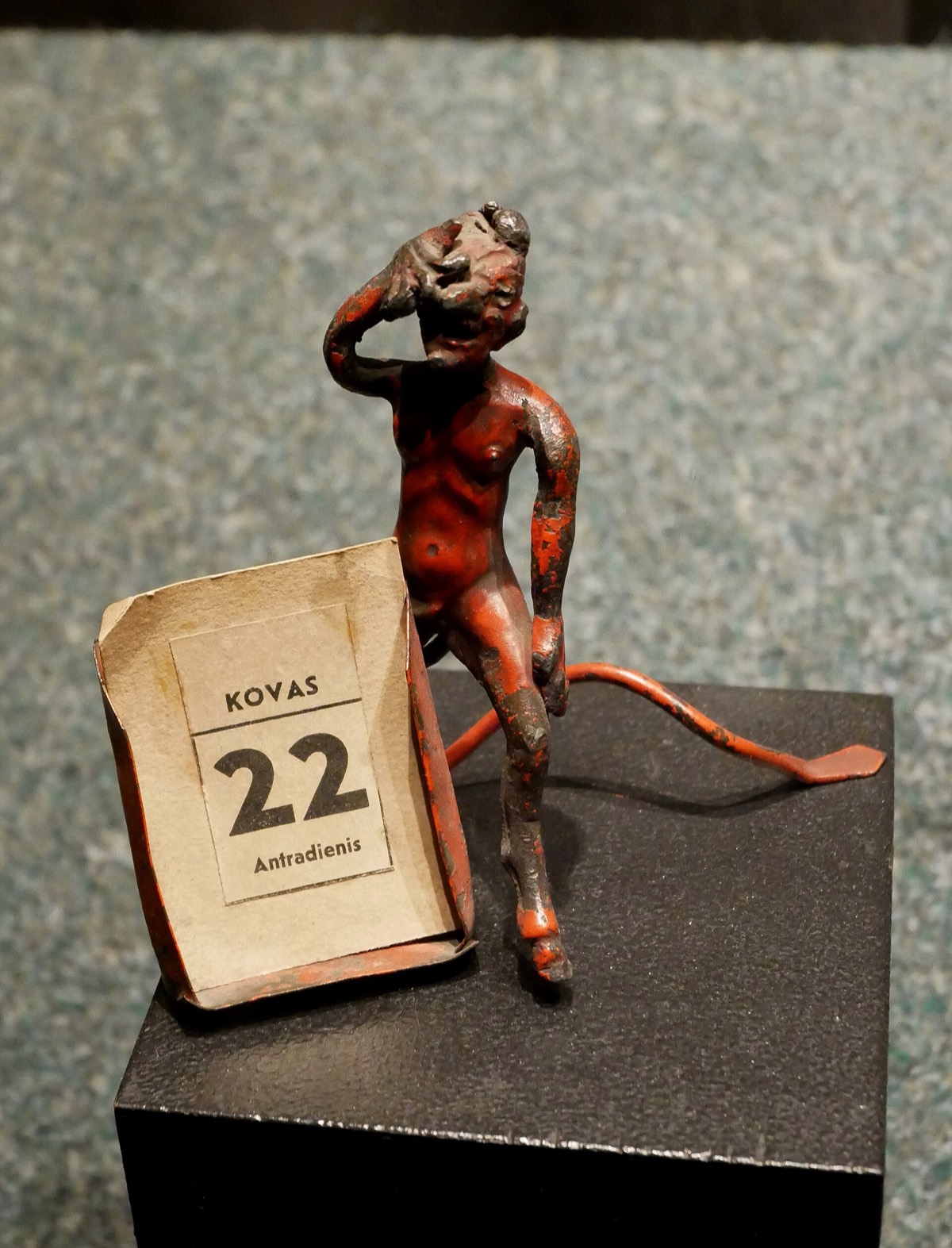
Painter Antanas Žmuidzinavičius set out to collect exactly thirteen dozen devils — 169. Today his museum holds over three thousand.
It all began in 1906 with a gift: the writer-priest Juozas Tumas-Vaižgantas gave the painter his first devil figurine. Žmuidzinavičius — a serious painter, one of the patriarchs of Lithuanian art — decided, as a joke, to collect a "devil's dozen of devil's dozens": thirteen times thirteen.
The plan collapsed quickly — luckily. Devils poured in from everywhere: friends brought them from travels, strangers mailed them. The collection outgrew the hundreds and never stopped.
What kind of devils
In Lithuanian folklore the devil is not a figure of horror but a homely one: a bit dim, easily tricked, usually losing to the cunning villager. So the collection is mostly characters, not monsters: devil musicians, devil card-players, Užgavėnės carnival masks, folk woodcarvings.
There are sharper works too — the best known shows Hitler and Stalin dancing a devils' dance over Lithuania. Folk humour meets historical memory.
What drew us to this collection
It's a rare case of a museum born from a personal joke — that became a serious ethnographic collection. The devil exposition opened in 1965, with the painter's memorial house alongside. Today the holdings count over 3,000 devils from some 70 countries: from Lithuanian woodcarvings to Japanese masks.
Where to see it
The A. Žmuidzinavičius Museum (Devils' Museum) is at V. Putvinskio g. 64, Kaunas, across from the M. K. Čiurlionis National Museum of Art — it is one of its branches, and both fit comfortably into a single day.
On the last Sunday of every month, entry is free.
Where to see it in person: A. Žmuidzinavičius Collections Museum (Devils' Museum) · Kaunas