The palace that didn't exist for two hundred years: the return of the Grand Dukes' residence
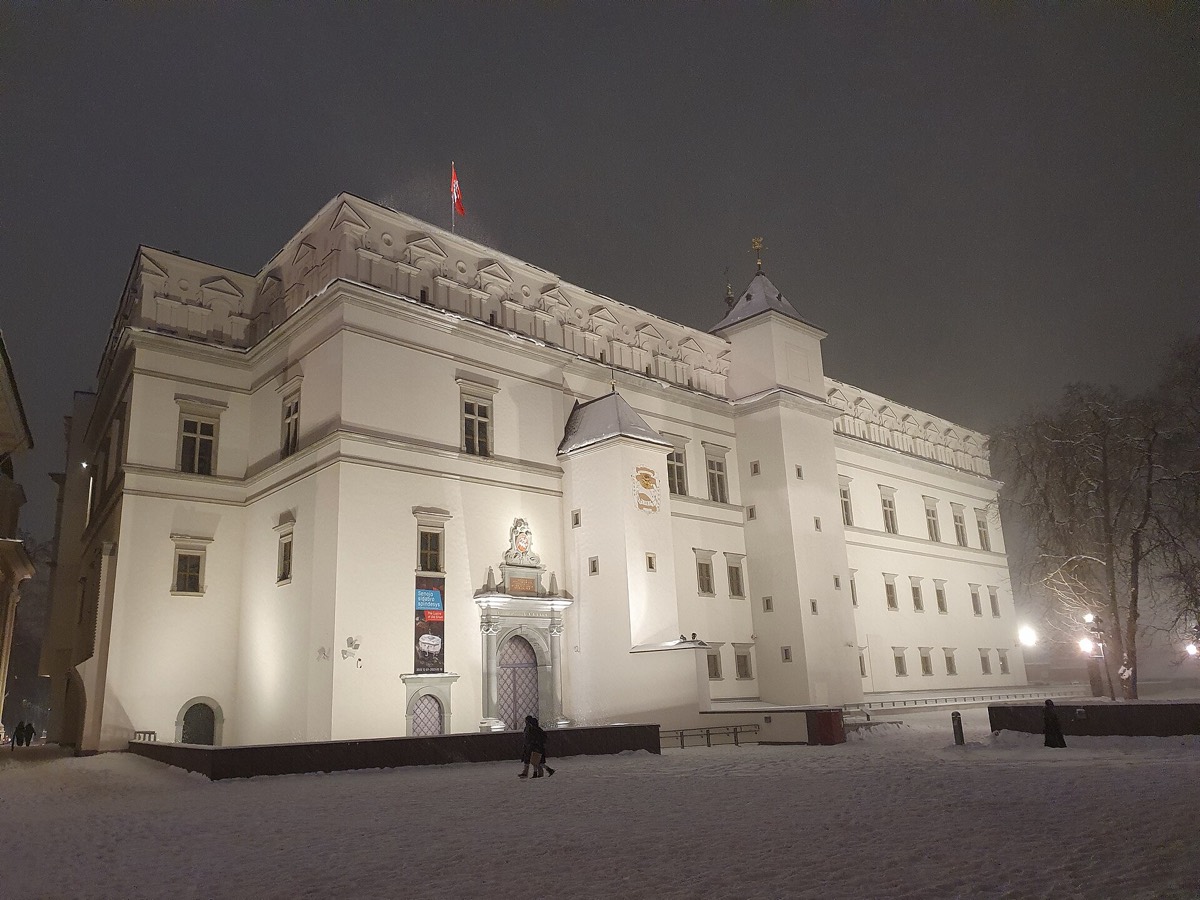
On Cathedral Square stands a palace your great-grandparents could not have seen: for two hundred years this place simply wasn't part of the Vilnius panorama.
The rulers' residence grew on the Lower Castle grounds from the 15th century: the Gothic of Alexander Jagiellon, the Renaissance of Sigismund the Old and Bona Sforza, the Baroque of the Vasas. In the 16th century one of the most lavish courts of this part of Europe operated here — with a library, a tapestry collection and one of the first opera stages north of the Alps.
The demolition
The palace was devastated by the mid-17th-century war with Muscovy and never recovered. In the early 19th century the tsarist administration ordered the ruins torn down and sold off as building material. Where the heart of the state had stood, an empty square remained — and every generation up to our own saw it that way.
The return
The idea of rebuilding matured together with independence. Archaeologists studied the cellars for decades — tens of thousands of finds, from stove tiles to jewellery. The rebuilt palace opened its doors in 2013; the basements display the authentic foundations — you can stand on 15th-century masonry.
The decision to rebuild was and remains debated: some architects and historians considered it too bold a reconstruction. But the museum answered with substance — expositions on the daily life of the Grand Dukes' court, finds from the excavations and recreated ceremonial interiors make it one of the most visited sites in Vilnius today.
Where to see it
National Museum — Palace of the Grand Dukes of Lithuania — Katedros a. 4, Vilnius, right by the Cathedral and Gediminas Hill.
On the last Sunday of every month the permanent expositions are free.
Where to see it in person: Palace of the Grand Dukes of Lithuania · Vilnius