A castle in the middle of a lake: how Trakai lost and regained its symbol
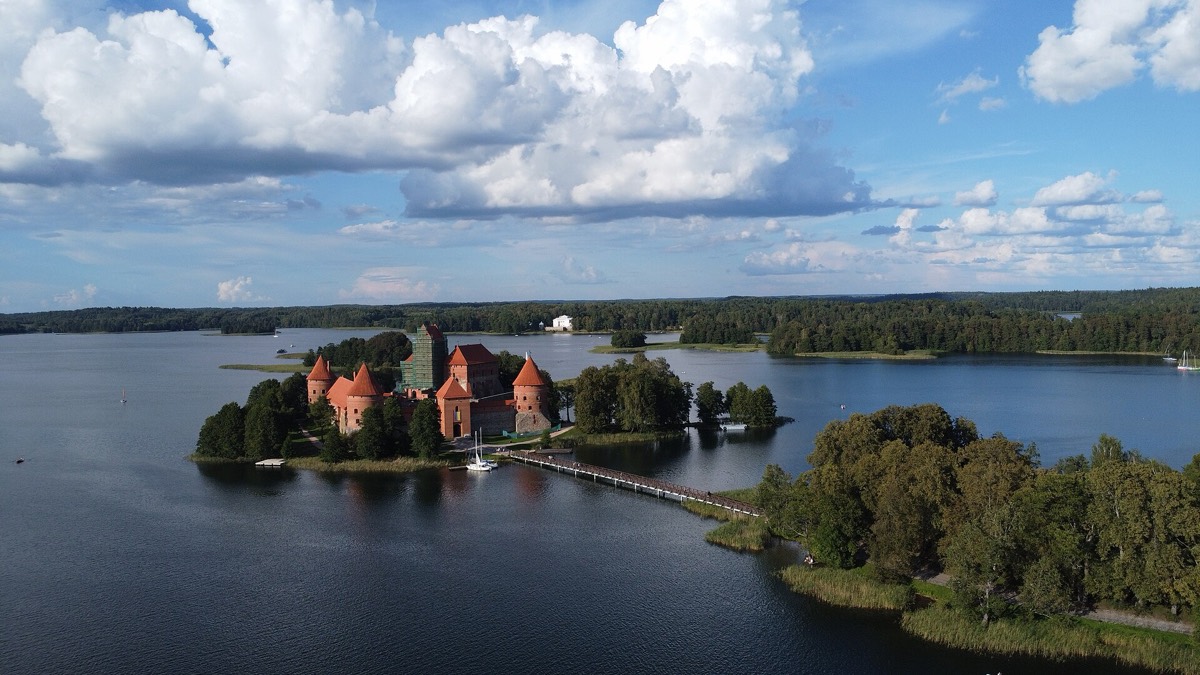
On an island in Lake Galvė stands a castle that was twice the centre of the Lithuanian state: in the Middle Ages as the rulers' residence — and in the 20th century as proof that history can be rebuilt.
Duke Kęstutis began the brick castle on the island in the second half of the 14th century; his son Vytautas the Great completed it in the early 15th, just before the Battle of Grunwald. Three islets, defensive towers, a Gothic residence with great halls — it was one of the most advanced castles in the region.
Vytautas kept Trakai as one of his key residences. Here he received envoys, and here he died in 1430 — never having received the crown that, as the story goes, was on its way.
From residence to ruin
Once its military role faded, the castle served as a prison in the 16th century, and after the mid-17th-century wars with Muscovy it was left in ruins. For nearly three hundred years the towers crumbled in the middle of the lake — in Romantic drawings and early photographs.
What drew us to this place
Trakai is one of the few cases in Europe where a medieval castle was rebuilt from ruins almost in full. The restoration, begun between the wars and completed in the 1960s, drew criticism from Moscow in Soviet times — celebrating the "feudal past" was not encouraged. The castle was finished anyway and became the home of the Trakai History Museum.
Today it is probably Lithuania's most photographed view: red-brick towers above the lake water. The museum's expositions tell the story of the castle, the town, and the Karaim community.
Where to see it
Trakai Island Castle — Pilies sala, Trakai, about 30 km from Vilnius. Footbridges lead to the island from Karaimų g.
On the last Sunday of every month, the museum's expositions are free.