The house where "Lietuva brangi" lived: Maironis in Kaunas
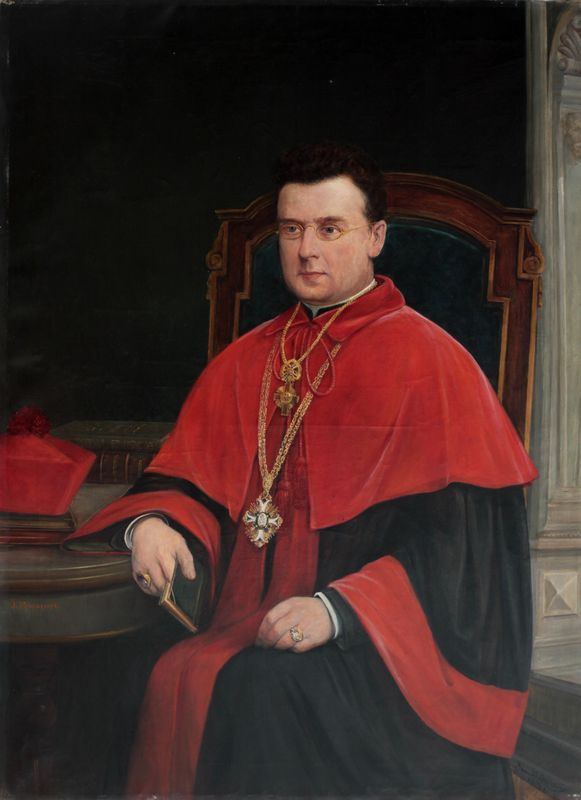
In Kaunas Old Town stands a house where a priest lived and wrote poems. The poems became songs, and the songs became the nation's memory.
Jonas Mačiulis-Maironis (1862–1932) was a priest, professor, prelate. And at the same time a poet whose collection "Pavasario balsai" (Voices of Spring) marked a turning point in Lithuanian literature: sonorous, musical poetry calling for national awakening. "Lietuva brangi", "Trakų pilis", "Kur bėga Šešupė" — these texts are sung to this day, often without anyone pausing to recall their author.
The house
Maironis bought an 18th-century mansion next to Kaunas Town Hall Square and lived there from 1910 until his death in 1932. Here he taught, received guests, wrote. The house preserves its authentic setting: the poet's study, the drawing rooms, personal belongings and his library.
As early as 1936 a museum opened in the house, growing over time into the Maironis Lithuanian Literature Museum — the country's principal museum of literary history, telling the story not only of Maironis but of the whole chain of writers' generations.
What drew us to this place
There is something exactly right about a literature museum living in a poet's house: literature here is not in display cases but in the rooms where it was written. Maironis' study with his writing desk is one of those museum corners where the past feels physical.
Where to see it
Maironis Lithuanian Literature Museum — Rotušės a. 13, Kaunas, in the very centre of the Old Town.
On the last Sunday of every month the permanent exposition is free.
Where to see it in person: Maironis Lithuanian Literature Museum (main house) · Kaunas