The fortress the sea moved into: the story of Kopgalis
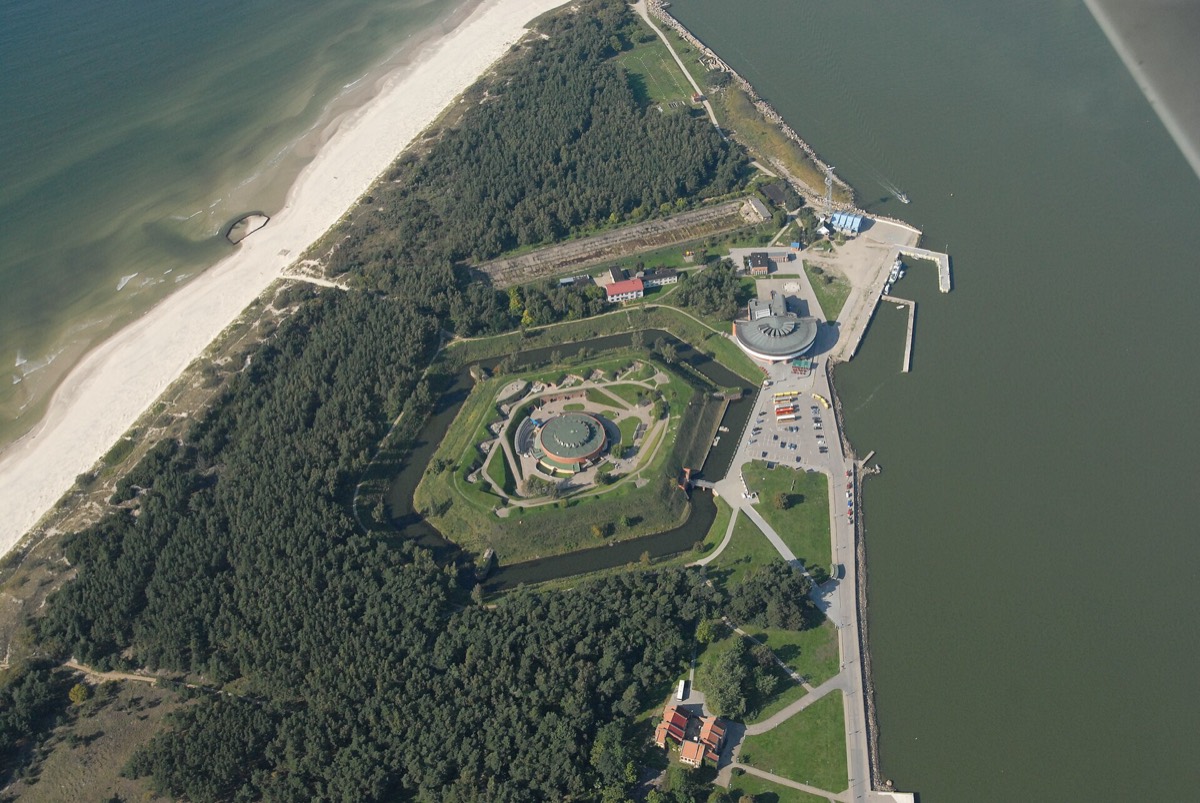
At the very tip of the Curonian Spit, where the lagoon meets the Baltic, stands a 19th-century fortress. It hardly ever fired a shot — and now penguins live in its forts.
The Prussian army built Kopgalis fortress in 1865–1871 to guard the port of Klaipėda: a ring fort with a moat, casemates and powder magazines. Its military career stayed modest — technology changed faster than wars arrived, and by the 20th century the fortress was falling into decay.
A second life
In 1979 the abandoned forts reopened as the Lithuanian Sea Museum — one of the country's most elegant examples of heritage reuse. In the casemates where shells were once stored, the history of seafaring is told; the central courtyard houses the aquariums.
The expositions cover everything connected to the sea: from old anchors and ship models to living creatures of the Baltic and distant oceans. A special point of pride — the penguin colony and the sea lions.
What drew us to this place
Kopgalis is a rare case where military heritage wasn't museumified "behind glass" but filled with life in the most literal sense. Getting there is an adventure in itself: the museum is reached by ferry across the lagoon, and the fortress ramparts open onto views of the Baltic and Klaipėda's port.
Where to see it
Lithuanian Sea Museum — Smiltynės g. 3, Smiltynė (Klaipėda), the northern tip of the Curonian Spit. Take the ferry from Klaipėda's Old Ferry terminal, then walk or cycle along the lagoon.
On the last Sunday of every month the permanent exposition is free. Worth knowing: dolphin shows are a separate paid programme.
Where to see it in person: Lithuanian Sea Museum (Smiltynė) · Klaipėda