A fly stuck in eternity: the inclusions of the Palanga Amber Museum
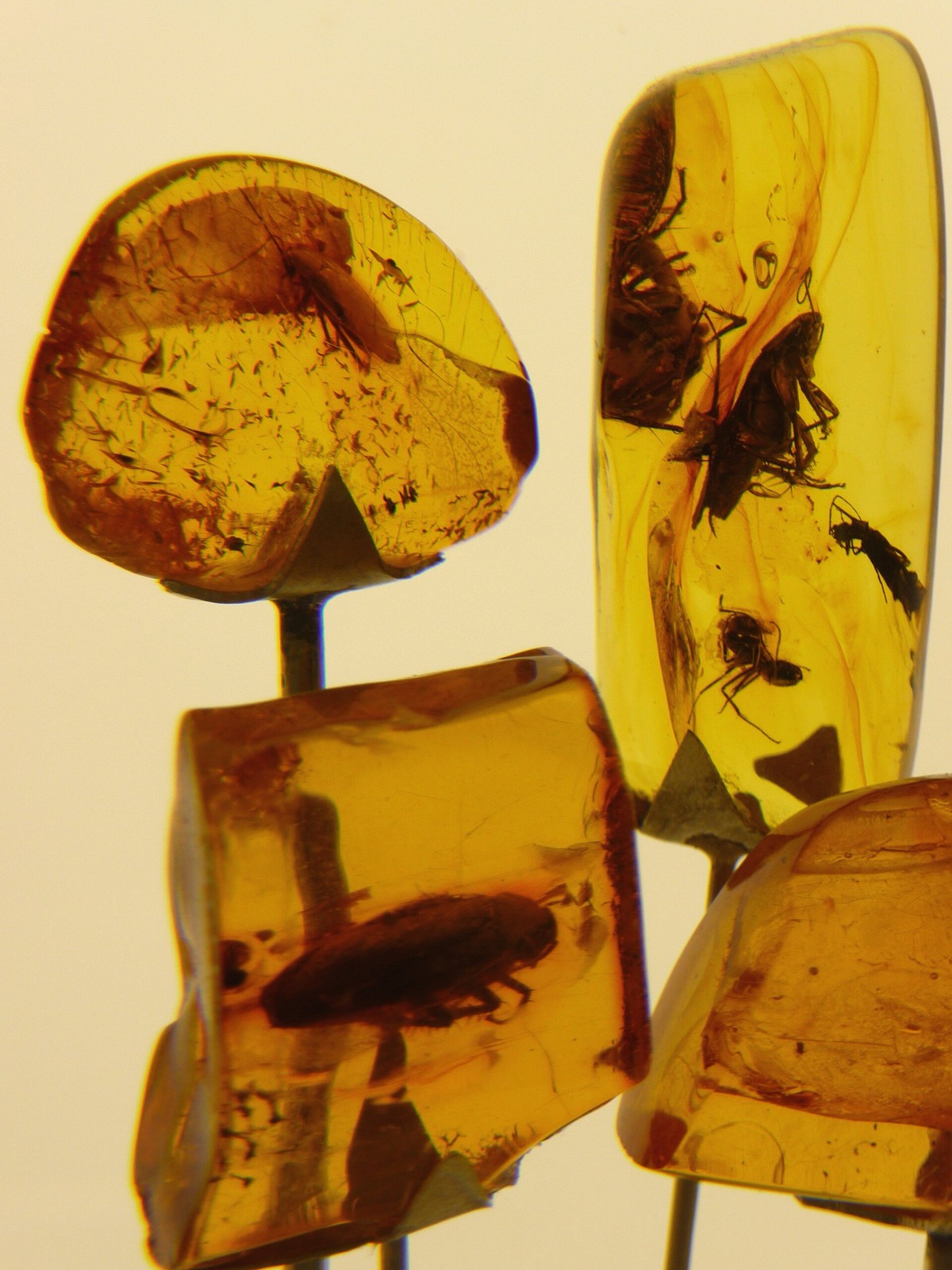
Forty million years ago a fly landed on a pine trunk — and stuck. Today you can examine it in a palace in Palanga: amber turned out to be nature's most reliable archive.
An inclusion is anything that got trapped in tree resin tens of millions of years ago: an insect, a spider, a pine needle, a bubble of air. The resin hardened, in time became amber, and its "prisoners" survived perfectly — down to the hairs on their legs and the veins of their wings.
For science this is priceless: inclusions offer a view of an ecosystem that vanished tens of millions of years ago. Baltic amber is among the world's richest sources of them.
A palace by the sea
The Palanga Amber Museum occupies the palace of the Counts Tiškevičiai — a neo-Renaissance residence built at the end of the 19th century, surrounded by a French-style park. The museum has worked here since 1963 and has gathered one of the largest amber collections in the world — tens of thousands of exhibits.
Among them are amber lumps of impressive size, ornaments from the Neolithic to the present day and, of course, the inclusion collection: hundreds of stones with insects caught in eternity.
What drew us to this collection
In Lithuanian culture amber is more than a mineral: from the legend of Jūratė and Kastytis to the "Baltic gold" trade routes that reached Rome itself. Inclusions add a cosmic scale to that story — the era when these stones formed is further from us than the dinosaurs are from the first humans.
Where to see it
Palanga Amber Museum — Vytauto g. 17, Palanga, in Birutė Park. It is a branch of the Lithuanian National Museum of Art.
On the last Sunday of every month the permanent exposition is free.