The designer born in Chicago: Feliksas Daukantas and the beginning of Lithuanian design
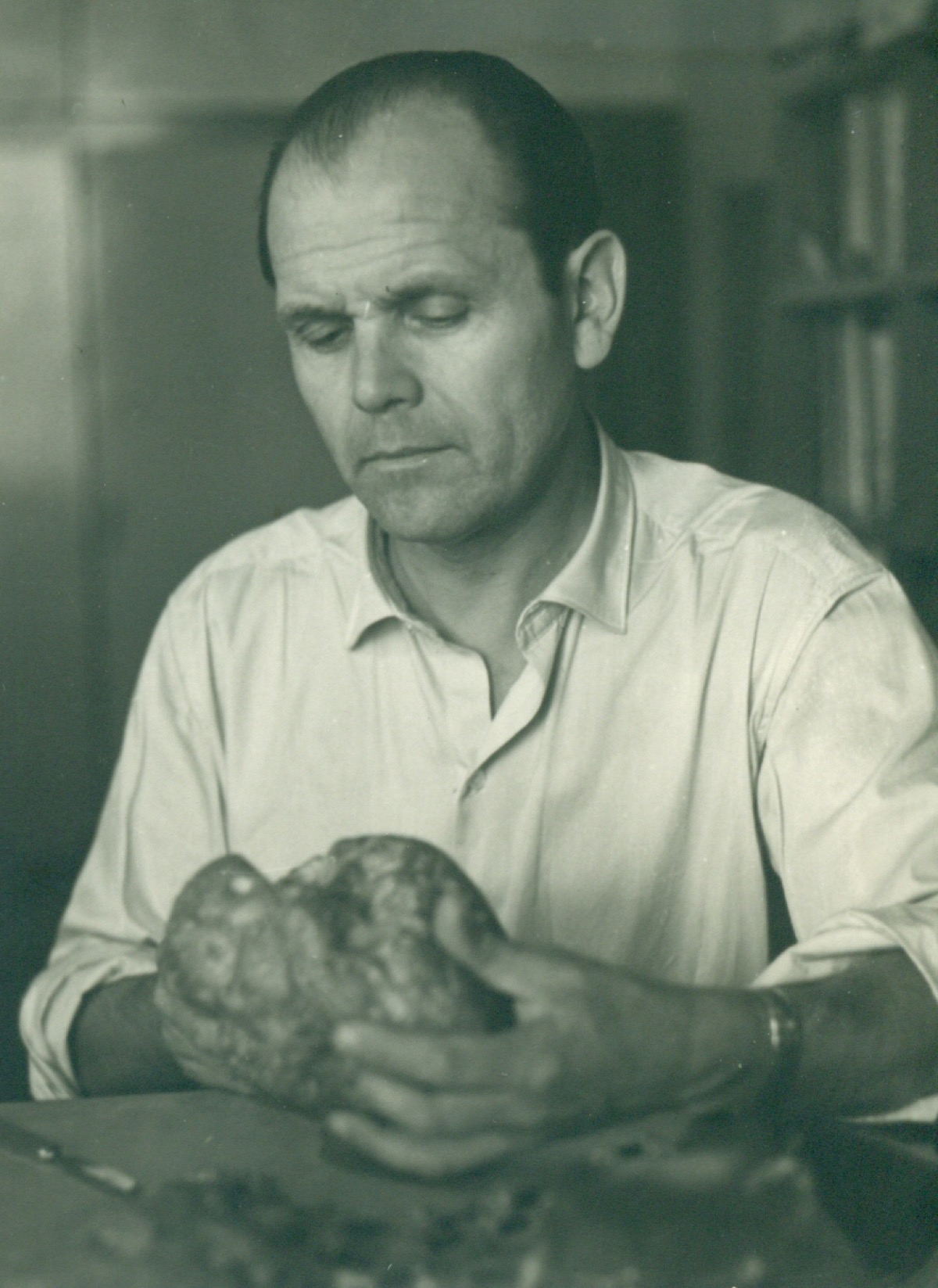
The man who taught Lithuania the word "design" was born in Chicago. And his school began with amber.
Feliksas Daukantas was born in Chicago in 1915, to a family of Lithuanian emigrants who soon returned home. His path to art was anything but straight: a gymnasium in Mažeikiai, a military school in Kaunas — and only in 1947 a sculpture degree from the Vilnius Art Institute.
From amber to a department
From 1949 Daukantas worked at the Dailė art factory, making amber jewellery and industrial graphics. It was in amber that he made what is still considered a turning point: he refused to polish amber "to a shine" and began showing the stone's natural beauty, developing the technique of negative amber carving.
In 1961, at the Art Institute, he founded the department of industrial product design — Lithuania's first school of design, which he led until 1985 (renamed the Design Department in 1987). He taught until 1992, a professor from 1979.
Which means something simple: several generations of Lithuanian designers are his students, or the students of his students.
What drew us to this story
Daukantas worked in an era when the word "design" officially did not exist — there was only "artistic construction". And yet he managed to create a discipline, a school and a profession. Among his works is the Palanga coat of arms (1970), and his pieces were shown at international exhibitions, including EXPO-67 in Montreal.
Where to see it
Daukantas' works and sketches are held at the Museum of Applied Arts and Design in Vilnius — in the Old Arsenal by the Vilnia river (Arsenalo g. 3A). It is a branch of the Lithuanian National Museum of Art, where design is shown alongside centuries of applied art. Worth checking what is currently on display before your visit.
On the last Sunday of every month, the permanent exposition is free.
Where to see it in person: Museum of Applied Arts and Design · Vilnius