The museum whose main exhibit is the sky
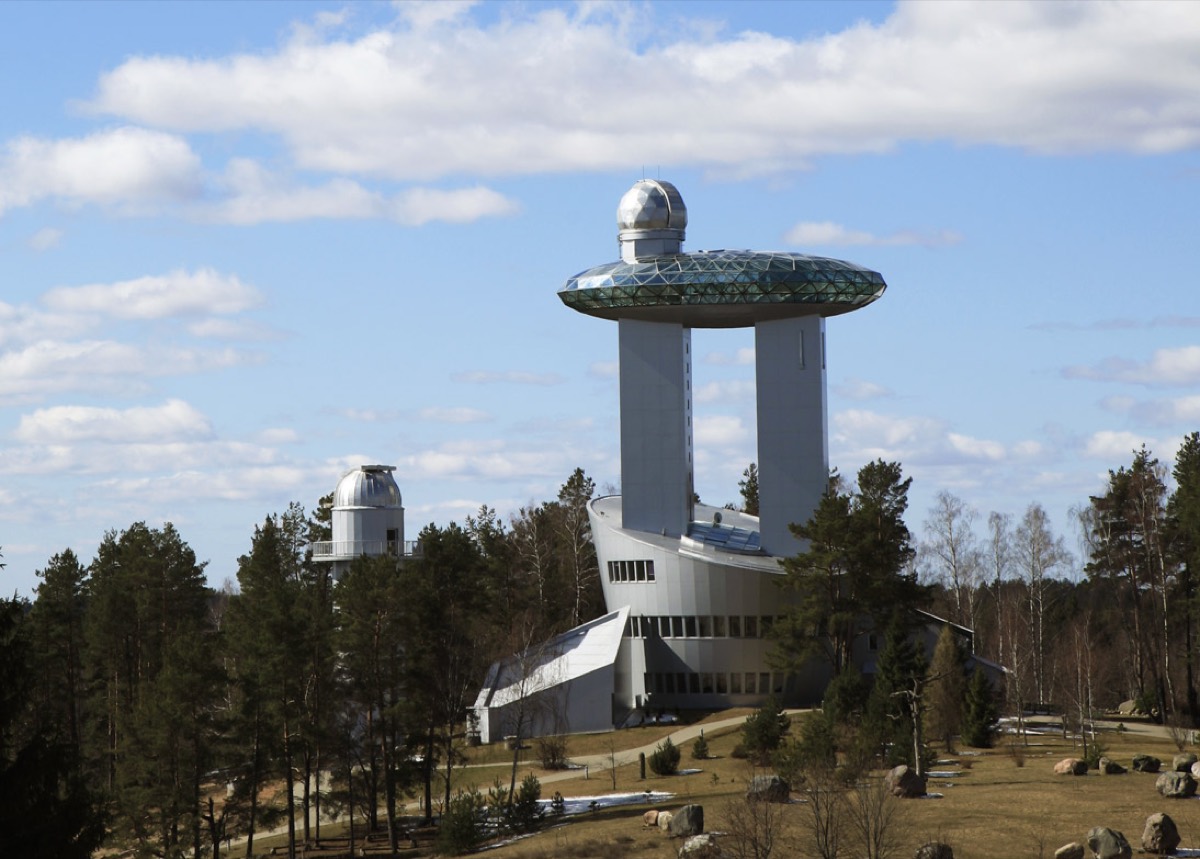
On a hill near Molėtai, a tower rises skyward as if landed from science fiction. This is a museum that exhibits not an object, but the human relationship with the sky.
The Museum of Ethnocosmology grew up beside the Molėtai astronomical observatory, founded in the 1960s far from city lights. The scientists working at the telescopes noticed a simple thing: in Lithuanian culture the sky had always been not only an object of study but a foundation of worldview.
So in 1990 a museum appeared that joins the seemingly unjoinable: folk mythology of the Sun, the Moon and the Milky Way — and modern astrophysics. Its founders proposed the term "ethnocosmology" to describe the field.
What you'll see
The exposition tells how celestial bodies lived in Lithuanian songs, calendars, ornaments and farmstead architecture — and how the same sky is watched by telescopes today. The observation tower with its futuristic "cosmic" crown rising above the forest has become the museum's symbol.
In the evenings the museum runs sky observations through the telescope — worth planning a separate trip for; check the schedule on the museum's website.
What drew us to this place
The museum presents itself as the first of its kind in the world — and it is hard to argue: you won't easily find another place where ethnography meets astronomy under one roof. It is one of Lithuania's most original museums — and one of the best places in the country to see a starry sky.
Where to see it
Lithuanian Museum of Ethnocosmology — Kulionys village, Molėtai district (about 70 km from Vilnius). Easiest to reach by car.
On the last Sunday of every month the permanent exposition is free; night observations are a separate paid programme.
Where to see it in person: Lithuanian Museum of Ethnocosmology · Kulionys (Molėtų r.)